7 Facts Behind JTeles's 20 Million Cloth Run to Become Rust's #1 Farmer
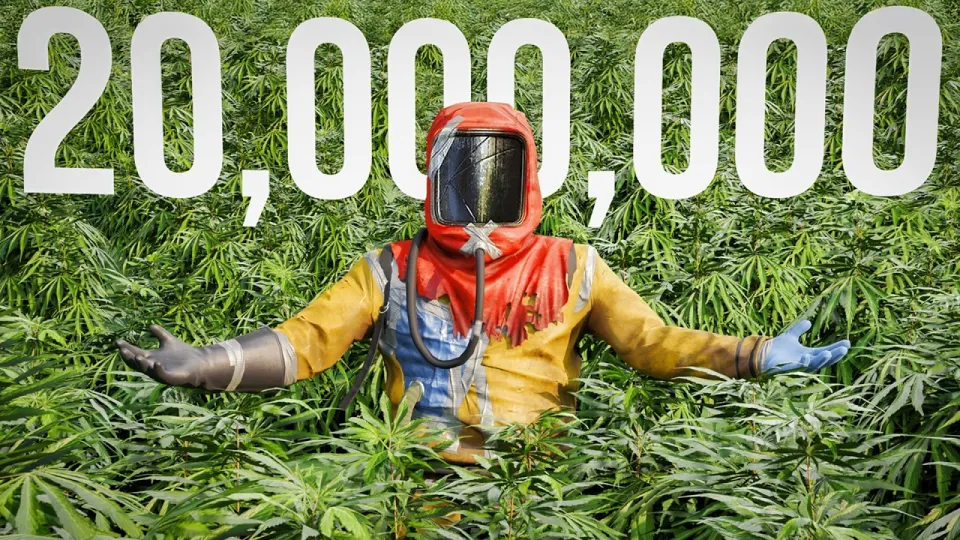
Video: I Became Rust's #1 Farmer...
Need articles like this for your video? They help promote it on YouTube and Google — order them in the Telegram bot @sat_sit_bot. It writes articles around your video, embeds the video and publishes them on popular niche websites (no ads). Try it free: 50 articles on us.
Key takeaways
- JTeles started the wipe with 126,000 cloth and set a target of 20,000,000 cloth within 7 days.
- Viewers were invited onto the server to help build what was billed as the biggest cloth farm in Rust.
- A large Russian clan learned about the project and attacked the farm with PvP, raids and base defense fights.
- The finished compound grew so large that looking at it caused server lag, according to viewers.
- Clanmates defended the base around the clock, including while JTeles was offline and sleeping.
Rust's cloth economy is usually a background chore: you pick hemp, craft cloth, and move on. JTeles turned it into a server-wide war by starting a wipe with 126,000 cloth and grinding toward 20,000,000 cloth in seven days to claim the title of Rust's #1 farmer. The attempt, documented in the video "I Became Rust's #1 Farmer...", involved inviting viewers onto the server, building the biggest cloth farm anyone had seen, and defending it from a clan that wanted the project dead. The run was also sponsored by War Thunder, and you can grab the free War Thunder bonus via JTeles's link.
What the 20,000,000 cloth challenge actually required
The goal was simple on paper: multiply 126,000 cloth into 20,000,000 before the wipe ended. That is roughly a 158x increase in a single week, which in Rust means scale, not skill alone.
Cloth comes from hemp plants, and the real bottleneck is not planting but harvesting, transporting and processing. To hit millions, a farmer needs:
- A planted area large enough that harvesting becomes a full-time job for several players.
- Storage and sorting so the base does not choke on stacks of cloth and hemp fiber.
- A defensible location, because a farm that size is a visible target on any server.
- A crew that can keep the operation running while the owner sleeps or fights.
JTeles solved the manpower problem by opening the server to viewers, turning a solo grind into a community project. That decision is what made a 20-million target plausible in seven days rather than a month.
Why the biggest cloth farm in Rust became a war zone
A mega-farm cannot stay hidden. Once a large Russian clan found out what was being built, the project stopped being about farming and became about survival. The clan's goal was to prevent the farm from being finished, which pulled the group into constant PvP, raids and base defense.
The compound grew into a massive, built-up structure, and viewers noted that simply looking at it caused server lag. That is the trade-off of extreme farming in Rust: the same size that makes a base impressive also makes it a landmark, and a landmark attracts raiders. Alliances formed, fights broke out over the farm itself, and the wipe turned into chaos across the whole server.
How the crew kept the farm alive around the clock
A 20-million cloth goal does not pause when the leader logs off. The clan members who stayed behind to defend the base while JTeles was offline and sleeping were the backbone of the run, holding the compound through attacks that could have ended the project overnight.
That division of labor is a template any large Rust group can copy:
- Farmers run the planters and harvest cycles during peak hours.
- Defenders hold walls, turrets and chokepoints when the base is most exposed.
- Crafters and sorters keep storage organized so nothing is lost to overflow.
- Leadership coordinates alliances so the group is not fighting every neighbor at once.
Without that structure, a farm of this size collapses the moment the owner disconnects.
Questions Rust players ask about mega-farms
Large-scale farming projects always raise the same practical doubts, and they are worth answering for anyone planning their own cloth empire.
- Is a 1,000-planter farm realistic? Experienced players have built farms of around a thousand planters on modded servers, but before the plant-all and harvest-all quality-of-life updates, planting and harvesting were done one plant at a time. That meant hours of clicking per cycle, and yields in the range of 17 million cloth were possible, at the cost of heavy server lag.
- Does size hurt performance? Yes. A compound big enough to lag the server when viewed is a real risk, both for your own frames and for how noticeable your base becomes.
- Do you need a clan? For 20 million cloth in one wipe, almost certainly. The math favors many hands over one dedicated farmer.
Where to find JTeles and the War Thunder offer
All of the creator's links from the video are collected here:
- War Thunder free bonus (PC and consoles): https://wtplay.link/jteles
- War Thunder mobile: https://wtm.game/jteles
- Discord community: https://discord.gg/jteles
- Twitter/X: https://twitter.com/xJTeles
- TikTok: https://www.tiktok.com/@xjteles
What the run says about farming in Rust
JTeles's 20-million cloth attempt shows that farming in Rust can be as competitive as any PvP server war. A target of 126,000 to 20,000,000 cloth in seven days forced the creation of the biggest cloth farm on the server, which in turn provoked raids, alliances and constant defense. The clanmates who held the base while the leader was offline deserve as much credit as the farmer himself. The video breakdown comes from the channel JTeles, and if you want to support the next experiment, start with the War Thunder sign-up through JTeles's link.
Source: I Became Rust's #1 Farmer... · Markdown version
Questions & answers
How much cloth did JTeles start with in the Rust challenge?
The run began with 126,000 cloth already in hand. From that starting point, the goal was to reach 20,000,000 cloth within a single wipe, roughly a 158x increase in seven days.
Why did a clan try to stop the cloth farm?
A farm large enough to produce millions of cloth becomes the most visible structure on the server. A large Russian clan found out about the project and attacked it with raids and PvP specifically to prevent it from being completed.
Can a huge cloth farm lag a Rust server?
Yes. Viewers reported that simply looking at the finished compound caused server lag. Very large bases with thousands of entities put real strain on performance, which is one reason mega-farms are rare on official servers.
Do you need a clan to farm millions of cloth in Rust?
Practically, yes. Harvesting, hauling and defending a farm of that scale takes many players, and the crew that defended the base while JTeles was offline was essential to keeping the project alive through raids.